AP1000
Westinghouse's passive PWR: it cools the core by gravity and convection for 72 hours without pumps or operators.
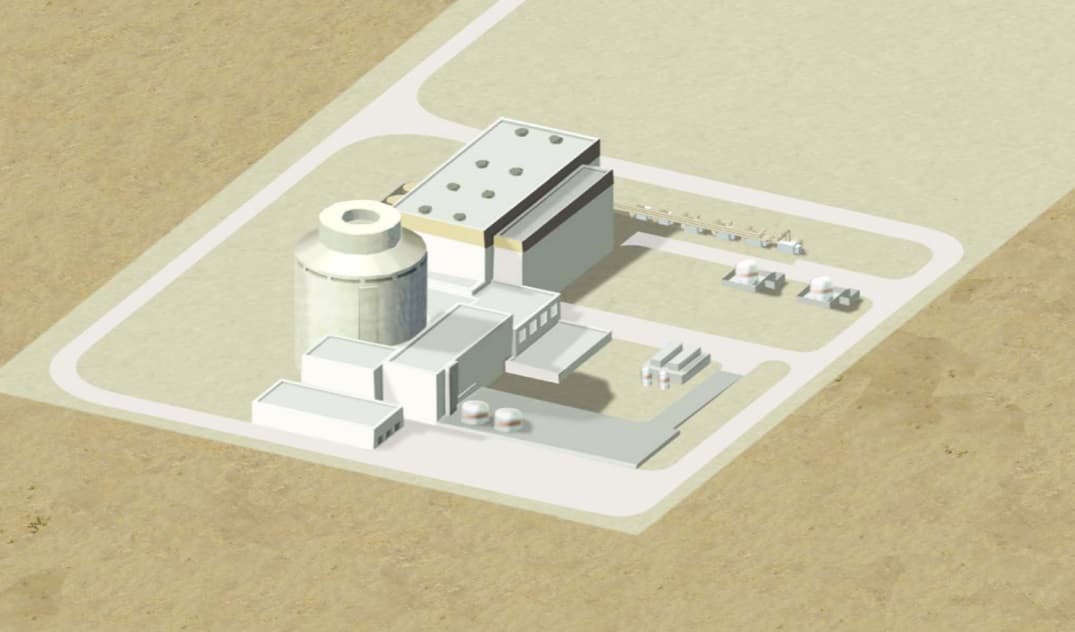
Two-loop pressurized-water reactor with passive safety systems. The developer states 3,415 MWt gross and 1,110 MWe nominal net output.
- Stated output
- 3,415 MWt · 1,110 MWe net · per unit
- Maturity
- Certified design
- Developer
- Westinghouse Electric Company
- Origin
- United States
Energy and applications
Published magnitudes; this is not an engineering diagram.
Three different states
Maturity, licensing and deployment are not equivalent.
Maturity
Certified designHow far the published engineering has progressed.
Licensing and review
1 regulatory readingWhat a regulator decided, where and on what date.
Linked deployment
9 geolocated unitsWhich projects or units are linked to the design.
Linked deployment
| Plant | Unit | Country | Dataset status |
|---|---|---|---|
| Haiyang | 1-1 | China | operating |
| Haiyang | 1-2 | China | operating |
| Sanmen | 1-1 | China | operating |
| Sanmen | 1-2 | China | operating |
| Lubiatowo-Kopalino | 1 | Poland | planned |
| Alvin W Vogtle | 3 | United States | operating |
| Alvin W Vogtle | 4 | United States | operating |
| Virgil C Summer | 2 | United States | construction |
| Virgil C Summer | 3 | United States | construction |
Licensing and review
What a regulator decided, where and on what date.
| Jurisdiction | Reading | Method | Date |
|---|---|---|---|
| United States | Design certified | 10 CFR Part 52 design certification; Revision 20 renewal/update under NRC review | 2026-03-27 |
Technical sources
- Westinghouse · AP1000 overviewDeveloper · 2026-09-16
- U.S. NRC · Issued Design Certification — AP1000Regulator · 2026-03-27
How it works and why it matters
The AP1000 drastically cuts the number of safety pumps, valves and pipes. In an accident, a large water tank above the containment cools the reactor by gravity and the steel containment is cooled by natural air convection. That removes the dependence on diesel generators for the first three days.
Sanmen and Haiyang in China were the first to operate, in 2018. Vogtle 3 and 4 in Georgia, connected in 2023 and 2024, were the first new reactors in the United States in more than 30 years, with enormous cost overruns. China now builds its localized version, the CAP1000, and is developing the CAP1400.
Quick facts
| Power | 1,117 MWe net |
|---|---|
| Safety | passive, 72 h with no action |
| Operating | Sanmen 1-2, Haiyang 1-2, Vogtle 3-4 |
| Derivatives | CAP1000, CAP1400 and the modular AP300 |